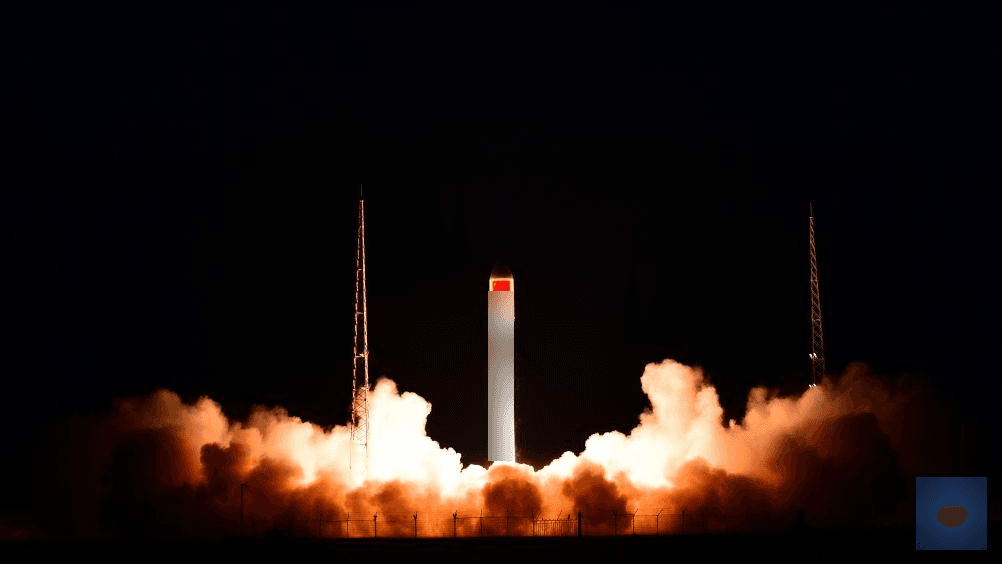
Galactic Energy's Ceres-2 rocket successfully launched four satellites on November 7, returning the vehicle to flight after its failed maiden mission earlier this year. The rocket lifted off from the Jiuquan Satellite Launch Center at 7:37 a.m. Beijing time, and the payloads reached their planned orbits, Xinhua reported.
The flight was designated Y3. IT Home identified it as Ceres-2's return to flight following the unsuccessful Y1 mission on January 17. The interval is nearly ten months. The November report confirms the result of this flight but does not provide a detailed account of the corrective work carried out after the first failure.
The four spacecraft included an experimental spacecraft and a university satellite, alongside two other satellites identified in the Chinese mission announcement. Xinhua reported successful placement of all four in their intended orbits. It did not disclose orbital parameters, individual payload masses or a timetable for commissioning the spacecraft in that announcement.
Ceres-2 is an enlarged successor to Galactic Energy's Ceres-1. The vehicle combines three solid-propellant stages with a liquid upper stage. Reported dimensions are about 30 meters in height and 2.35 meters at the widest part of the rocket body, with a liftoff mass of roughly 100 metric tons. Fairing options have diameters of 2.9 meters and 3.35 meters.
Its stated payload capacity is 1.3 metric tons to a 500-kilometer sun-synchronous orbit, compared with 300 kilograms for Ceres-1 on the same stated mission profile. That gives the company a larger vehicle for small and medium satellite constellations and replacement launches for larger networks. The capacity rating describes the rocket's design capability; it is not a disclosure of the combined mass carried on this flight.
The successful mission is a recovery milestone for this specific solid-propellant launch vehicle. It should not be confused with Galactic Energy's separate liquid-propellant rocket program. The available launch reports establish orbital delivery on November 7, but do not yet establish a sustained flight cadence for Ceres-2.
SEE ALSO:
评论交流(0)
登录后即可参与评论交流,立即登录 / 注册
还没有评论,来抢沙发~